In our daily lives, the power system is like an invisible artery, supporting everything in operation. In this vast and intricate system, there is a type of 'guardian' that is crucial, and they are circuit breakers. They are usually unknown, but in critical moments, they need to be able to quickly and accurately 'cut off' anomalies to protect the safety of the entire power grid. How can we know if these 'guardians' are always in their best condition? Now it's our turn for today's protagonist - the circuit breaker characteristic tester!
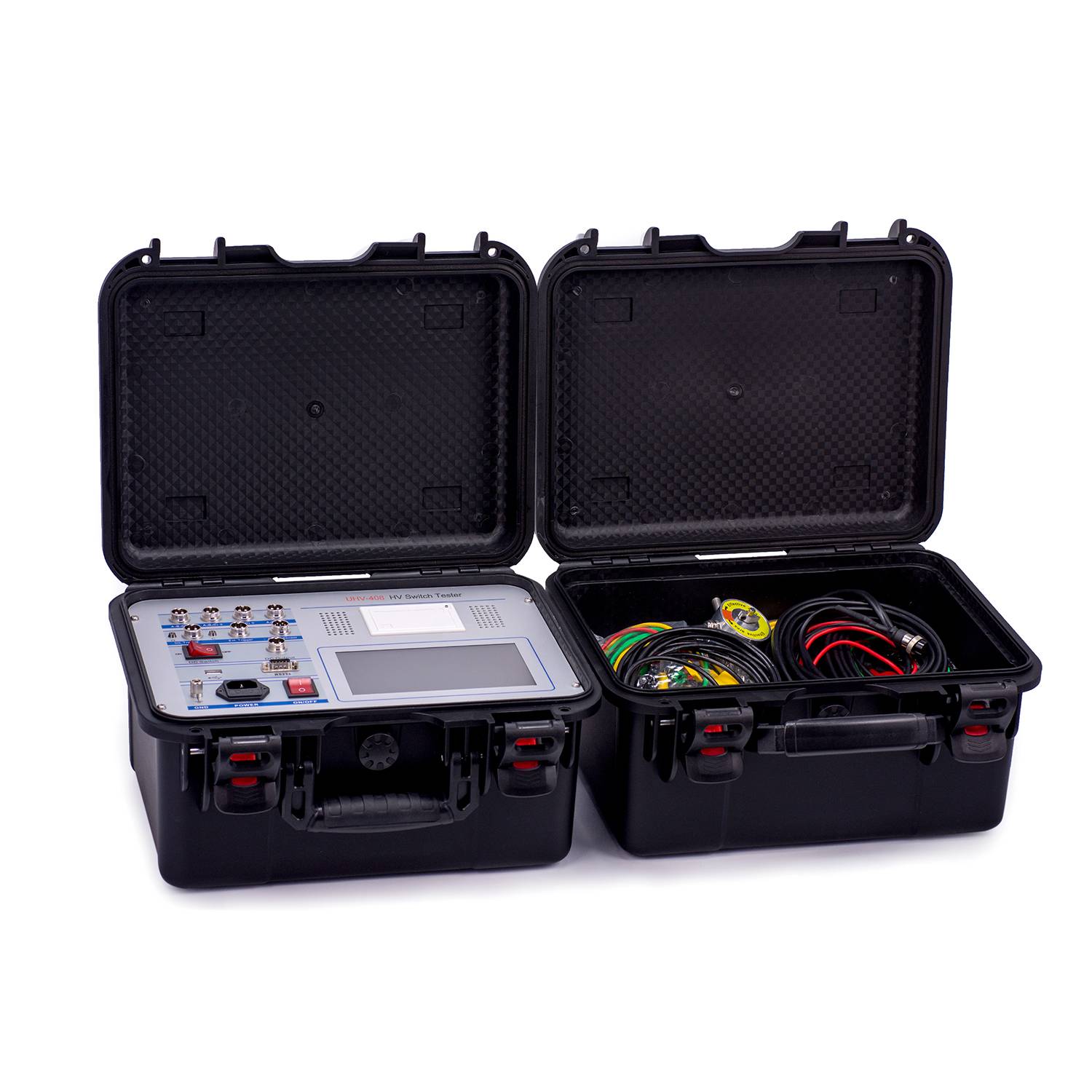
What is a circuit breaker characteristic tester? What role does it play?
Simply put, a circuit breaker characteristic tester is a precision instrument specifically designed to test various performance indicators of circuit breakers. You can imagine it as a doctor giving a "health check" to a circuit breaker. A circuit breaker is not a simple switch, its internal structure is complex, and it needs to go through a series of actions such as "closing", "opening", "reclosing", etc. The speed, time, stroke, moving contact pressure, energy consumption, and so on of these actions are the key to measuring its performance.
Closing/Opening Time: The time required for a circuit breaker to receive a command and for the contacts to fully close or open. The shorter and more stable this time is, the faster the response of the circuit breaker and the more timely the protection effect.
Bounce time/frequency: During the closing or opening process of a circuit breaker, the contacts may briefly make contact and disconnect, which is called "bounce". Excessive bouncing will increase the wear of the contacts and affect their lifespan.
Travel/speed characteristics: The distance and speed changes of the contact during the action process. This can reflect the dynamic characteristics of the circuit breaker mechanism, as well as whether there are problems such as jamming and insufficient damping.
Contact pressure: The magnitude of pressure exerted when the contact is in contact. Adequate contact pressure is key to ensuring conductivity and preventing overheating.
Coil current/power consumption: The energy consumed by the electromagnetic coil that controls the operation of the circuit breaker during the operation process. This can reflect whether the driving force of the institution is sufficient.
These seemingly tedious parameters are the direct basis for evaluating the performance and reliability of circuit breakers. Once these parameters are abnormal, it may cause the circuit breaker to malfunction and even lead to power grid accidents.
What are the factors that affect the characteristics of circuit breakers?
Our 'health check-up officer' can detect problems, but where is the root of the problem? There are many factors that affect the characteristics of circuit breakers. Let's talk about a few main ones:
Manufacturing process and quality: This is the most fundamental. If there are defects in the design, material selection, and processing of the circuit breaker itself, its performance may be inherently inadequate.
Operating environment: Long term operation in harsh environments such as high humidity, high temperature, high dust, and corrosive gases can accelerate the aging and wear of circuit breaker components, affecting their mechanical performance.
Operating frequency and aging: Just like us humans, using it too much can also make us "tired". Under high-frequency operation, the internal springs, dampers, insulation materials, etc. of circuit breakers will gradually age, resulting in changes in their operating characteristics.
Maintenance: Regular and scientific maintenance is the key to extending the life of circuit breakers and maintaining their good performance. If maintenance is not in place, some minor issues may be overlooked and eventually evolve into major failures.
Excitation coil and spring energy storage: These are the "power sources" for the operation of circuit breakers. The performance degradation of the excitation coil and insufficient energy storage of the spring can lead to slow or weak operation.
What tools do we use for physical examination?
When it comes to tools, we have to mention our protagonist - the circuit breaker characteristic tester! There are many excellent testing equipment on the market, and their functions are becoming increasingly powerful and their operation is becoming more and more convenient.
Integrated tester: This device usually integrates multiple testing functions and can directly measure various characteristics of circuit breakers on site, such as circuit breaker action characteristic testing.
High precision sensor: When used in conjunction with a testing instrument, it can accurately capture subtle changes in the action process of the circuit breaker, such as testing the closing speed of the circuit breaker.
Data analysis software: Modern testing instruments are equipped with professional data analysis software, which can process the collected data, generate intuitive test reports, facilitate user comparison and analysis, and even evaluate the status of circuit breakers.
Of course, when choosing and using these tools, we also need to consider the brand. Companies like Wuhan UHV Power Technology Co., Ltd. have a deep technical accumulation and high-quality products in this area, making them a trustworthy choice.
What is the circuit breaker characteristic tester related to?
Itucircuit breaker characteristic tester is not fighting alone, it is closely connected to many aspects of power system safety operation and maintenance:
Diagnosis and status monitoring of power equipment: It is an important tool for diagnosing the health status of circuit breakers and conducting status monitoring. Through regular testing, potential faults can be identified in advance.
Relay protection setting and verification: The operating characteristics of circuit breakers directly affect the coordination of relay protection. The test results of the tester can provide a basis for the setting and calibration of relay protection.
Preventive testing of power equipment: As a key disconnecting device, the preventive testing of circuit breakers is an important guarantee for the safe operation of the power system, and the circuit breaker characteristic tester is the core equipment to complete this test.
Acceptance before putting new equipment into operation: Newly installed circuit breakers must undergo strict characteristic testing before being put into operation to ensure that they meet design requirements.
Troubleshooting and Root Cause Analysis: When a power failure occurs, conducting characteristic tests on the circuit breaker can help quickly determine whether it is a problem with the circuit breaker itself and thus identify the root cause of the fault.
How can we do better? Make the 'physical examination' more precise and effective
To improve the "physical examination" effect of circuit breakers, we can start from the following aspects:
Scientifically develop testing cycles: Based on factors such as the type of circuit breaker, operating environment, and load conditions, reasonably arrange the frequency of testing. We can't test it once a year, nor can we test it eight times a day. We need a scientific plan.
Choose appropriate testing instruments: Select testing instruments with matching functions and reliable accuracy for different types of circuit breakers and testing requirements. Wuhan UHV Power Technology Co., Ltd. provides various reliable solutions.
Standardized operating procedures: Strictly follow the instrument manual and relevant regulations to ensure the accuracy and comparability of test data.
Pay attention to data analysis and trend judgment: it is not just about looking at single test results, but also about comparing and analyzing historical data to identify trends in performance changes, in order to make more accurate fault predictions.
Combining with other diagnostic methods: Although the test results of the circuit breaker characteristic tester are important, they can also be combined with other diagnostic methods such as infrared temperature measurement, partial discharge detection, etc. to conduct a more comprehensive evaluation of the circuit breaker.
Professional technical personnel training: Ensure that operators have professional knowledge and skills, can correctly use instruments, and accurately interpret test results.
Frequently Asked Questions (FAQ)
Q: Why does the operation time of circuit breakers affect relay protection? A: The relay protection device needs to set its operating threshold based on the operating time of the circuit breaker. If the circuit breaker operates for too long, it may cause the fault current to last for too long and damage other equipment.
Q: Do I need to disconnect the power supply when testing the characteristics of a circuit breaker? A: Yes, in order to ensure the safety and accuracy of the test, it is usually necessary to disconnect the power supply of the circuit breaker's circuit and take necessary safety measures during operation.
Q: How to determine if the number of bounces tested is qualified? A: Whether the bounce frequency is qualified needs to refer to the design standards of the circuit breaker itself and relevant industry specifications. Usually, one bounce is allowed, but multiple bounces may indicate a problem.
Q: What are the advantages of Wuhan UHV Power Technology Co., Ltd.'s products in circuit breaker characteristic testing? A: Wuhan UHV Power Technology Co., Ltd. has many years of research and development experience in the field of power testing equipment. Its circuit breaker characteristic tester products usually have high precision, good stability, easy operation, and complete functions, which can meet the needs of different users.
Q: How often should a characteristic test be conducted on a running circuit breaker, apart from a newly installed one? A: There is no fixed answer for this frequency, it depends on the type, criticality, operating years, environmental conditions, and previous test results of the circuit breaker. Generally speaking, the power department will develop a detailed periodic testing plan based on relevant regulations and actual situations, which may be conducted once a year, three years, or five years.